A $Destiny Deep Dive 💚 | Saturday, November 14, 2026
Listen up, America.
A 400-foot rocket left Texas on Friday. The top half flew around the planet 14 times. Then on Saturday afternoon it came screaming back through the fire, flipped upright and got snatched out of the sky by a steel tower with giant arms.
At 4:20 p.m. Eastern. While the webcast played "Baby Come Back."
I could not make this up if I tried.
But a deep dive means more than the highlight reel. The booster blew up. The cause is still under investigation. And the big question is what this actually changes for the moon, for your internet and for the company's brand new stock.
Grab your coffee. Let's deep dive. 👇
🦾 1) MECHAZILLA CAUGHT A SPACESHIP. FROM ORBIT.
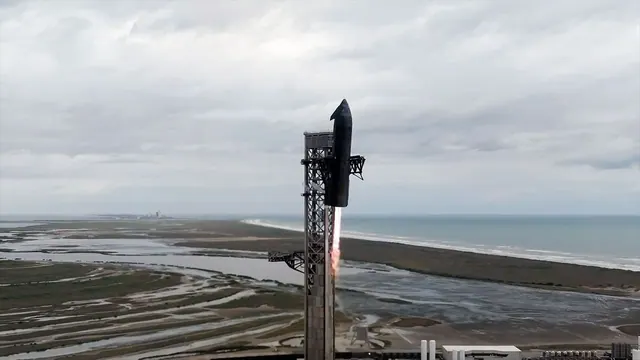
Here's what happened. On Saturday, November 14, at about 4:20 p.m. ET (3:20 p.m. local Texas time), Starship's upper stage, called Ship 42, came back to the same Starbase launch site it left 22.5 hours earlier. Three Raptor engines lit for a landing flip, it slowed down, and the tower SpaceX calls "Mechazilla" closed its arms and caught it. SpaceX Flight 15 page | Space.com
That is the first time SpaceX has ever caught the upper stage. The AP called it the first-ever midair capture of a spacecraft returning from space. AP via Los Angeles Times | Aviation Week
And the SpaceX hosts lost it. Dan Huot said, "That was the holy grail of spaceflight, plummeting through fire to be snatched out of the air by steel. We caught a Starship, and now everything changes." Then, per the AP: "Look at her! Baby, she's back!" Space.com reports "Baby Come Back" was playing over the landing webcast, and that's exactly why that song is trending on X tonight. Space.com | Sawyer Merritt on the 4:20 timing
Watch on X: https://x.com/SpaceX/status/2121715216597827756
Translation: the part of the rocket that goes all the way to orbit just came home and parked itself like a truck backing into a loading dock. Except the dock is a skyscraper and the truck was coming in from orbit about 20 minutes earlier. 🚛
⏱️ 2) 22.5 HOURS, 14 LAPS: THE TIMELINE
Let me walk you through it, because the timeline is wild.
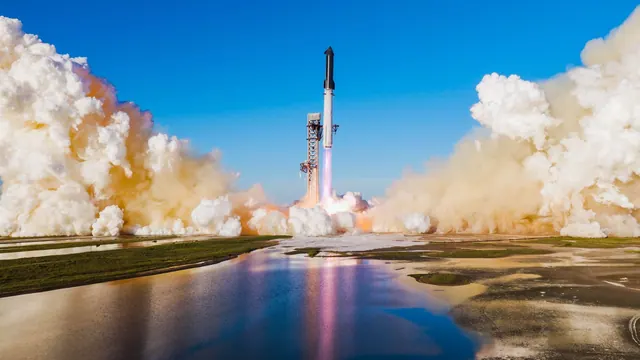
Friday, Nov. 13, 5:47 p.m. ET: Starship lifts off from Pad 2 at Starbase on 33 Raptor engines. The AP calls it a 407-foot behemoth, the biggest and most powerful rocket in the world. About two minutes in, the ship lights its own engines and separates from the booster, which SpaceX calls hot-staging. SpaceX | SpaceX on X
About 26 minutes in: the ship relights a single Raptor and pushes itself into orbit. This is only the second time Starship has ever reached orbit. The first was Flight 14 on Sept. 28. Space.com
First evening: it deploys 26 Starlink V3 satellites, and SpaceX says it made contact with every one. SpaceX on X
Overnight: the ship coasts around Earth about 165 miles up, beaming live video down over Starlink. Elon posted, "Starship is traveling around the world every ~90 minutes right now." It finished 14 laps, compared to about two on the previous flight. AP via LA Times | Elon Musk on X
Saturday afternoon: teams poll "go" to bring it home. A deorbit burn around 3:25 p.m. ET breaks it out of orbit, then it plows through reentry, goes subsonic, flies a final "swoosh" over the Gulf and drops into the tower's arms. SpaceX on X | SpaceX on X
Watch on X: https://x.com/SpaceX/status/2121437515819159871
Bottom line: most of us can't keep a houseplant alive for 22 hours. These people kept a skyscraper alive in space and then brought it home to the exact spot it left from. 🌱
💥 3) THE BOOSTER DID NOT GET THE MEMO
Now the part the victory laps skip. The real plan for Flight 15 was a double catch: catch the booster Friday AND the ship Saturday. That would have been a full recovery of an orbital rocket, something nobody has ever done. It didn't happen. Space.com
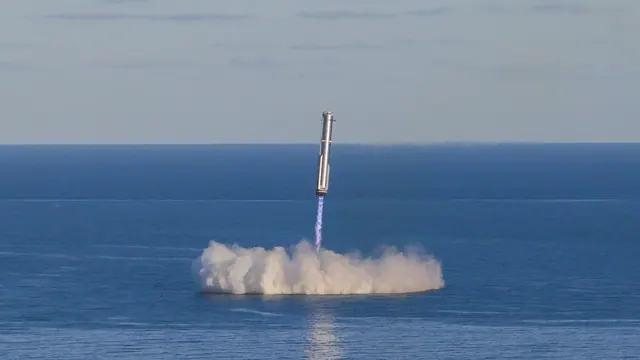
What SpaceX says: Booster 22 relit 32 of its planned 33 engines for the boostback burn. The burn ended early "due to low fuel mass, with the root cause under investigation." The booster's own guidance system triggered an automatic abort and diverted to an offshore spot in the Gulf. It did its landing burn hovering over the water, and when the engines shut off, the flight termination system was triggered. SpaceX Flight 15 page
In normal words: it destroyed itself on purpose over the water instead of trying to come back to the tower. CNBC and the AP both describe it exploding before it hit the water. SpaceX's Kate Tice said, "Well, that certainly isn't the news that we had hoped to hear for today," and explained the booster sensed it wasn't in the right position and kicked off the detour and self-destruct on its own. The AP says wreckage was still in the Gulf on Saturday, roped off by buoys. AP via LA Times | CNBC
CNBC also reports the Hawaii Department of Transportation briefly paused some West Coast flights Friday over debris risk from the flight. That order has since been lifted. CNBC
Watch on X: https://x.com/SpaceX/status/2121439746740170859
Here's the gut check: what's established is the booster was lost and there was no double catch. What's NOT established is why it ran low on fuel. SpaceX says it's investigating. Anybody telling you the exact cause tonight is guessing. 🔍
🧠 4) WHY CATCHING THE SHIP IS THE HOLY GRAIL
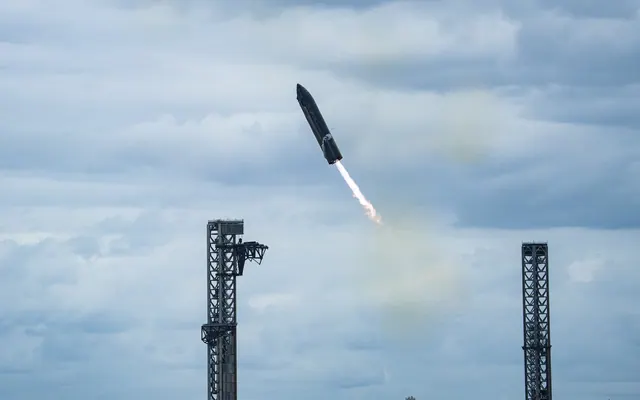
You might be thinking: didn't they already catch a rocket? Yes. The booster. SpaceX caught its first Super Heavy booster with the tower arms on Flight 5, back on Oct. 13, 2024, on the first try, and the AP says it has now done three booster catches total. SpaceX Flight 5 page | AP via LA Times
The ship is a whole different animal. Space.com puts it simply: the upper stage flies higher, farther and faster than the booster. On this flight it came all the way down from orbit, through reentry heat that can wreck a heat shield, and still had to slide right between the tower's arms. Some of the Starlink satellites it had just dropped off even took pictures of its heat shield to check it before the landing. Space.com
So why does it matter? Think about your truck. If you had to junk it after every trip to Walmart, nobody could afford to drive. That's how rockets have mostly worked. SpaceX says catching both stages lets it inspect, refurbish and fly them again much faster, and that's the whole point. Space.com
Elon even called it ahead of time on SpaceX's third-quarter earnings call: "success is not guaranteed on these first flights, but I'd say it's more likely than not that this succeeds next flight." Well. He was half right. The ship half. The Verge
Let's be real: a catch you can repeat is what changes the price of space. One catch is a highlight. Ten catches is a business. 💼
🌕 5) THE MOON, MARS AND YOUR WIFI
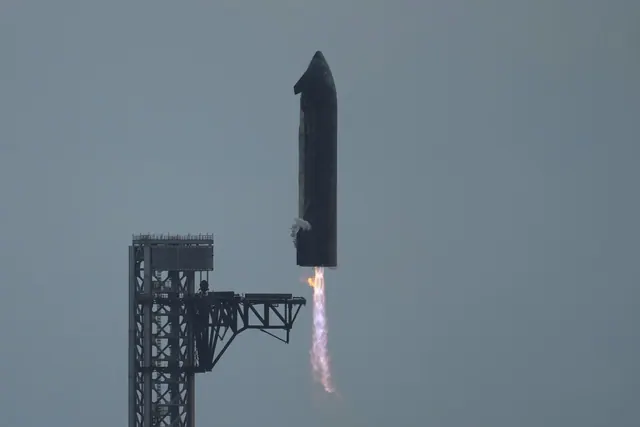
This isn't just a cool video. NASA is paying billions of dollars for Starship to land Artemis astronauts on the moon later this decade, per the AP. NASA Administrator Jared Isaacman posted right after the catch: "It was almost magic..Making more believers by the day....one step closer to 🌖🇺🇸" AP via LA Times | Jared Isaacman on X
Here's the road map as reported. Artemis III, which Isaacman says launches in 2027, stays in Earth orbit so astronauts can practice docking with Starship and Blue Origin's Blue Moon lander. NASA is targeting as soon as 2028 for Artemis IV, the first moon landing since Apollo. And the AP says SpaceX expects to start launching Starships from Kennedy Space Center in Florida within the next few months. Space.com interview with Isaacman | AP via LA Times
Then there's the money maker: Starlink. CNBC reports Starlink is SpaceX's profit center, with over 11,000 satellites already up and room for up to 60 V3 satellites on one Starship. Space.com says Flights 14 and 15 put up the first 52 V3s, the start of a planned constellation of up to 100,000. Elon says future Starship flights will carry over 50 Tb/s of Starlink bandwidth to orbit. And yes, he still wants a city on Mars. CNBC | Space.com | Elon Musk on X
Watch on X: https://x.com/NASAAdmin/status/2121715782350504106
So what does this mean for you? Cheaper rockets mean cheaper launches. Cheaper launches mean more satellites, better internet out in the country where the cable company never bothered to run a line, and an American flag back on the moon before China gets one there. That's the stakes. 🇺🇸
❓ 6) WHAT WE STILL DON'T KNOW
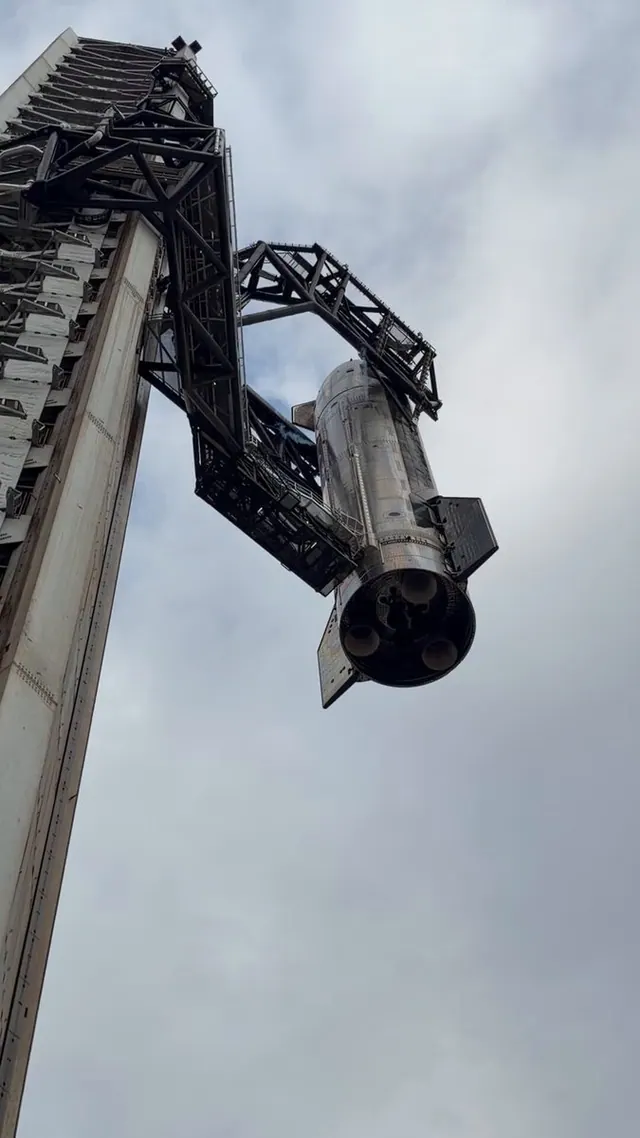
I don't do hype without receipts, so here's the open list:
- Why the booster ran low on fuel. SpaceX says the root cause is under investigation. No answer yet. SpaceX
- How Ship 42 really held up. Elon posted "Inspecting ship 42 right now" and then "Ship 42 looks great!" That's his word from a first look, not a full engineering report. Elon Musk on X | Elon Musk on X
- Whether a caught ship can fly again fast. Catching it is step one. Re-flying it is the part that actually changes the math, and that hasn't happened yet.
- When the next try for a double catch is. Space.com expects SpaceX to try again, probably on the next flight. No date has been announced. Space.com
- Whether the Florida pad and the moon schedule hold. "Within the next few months" and "as soon as 2028" are targets, not promises. AP via LA Times
Watch on X: https://x.com/elonmusk/status/2121733992726802703
Real talk: one booster lost, one ship caught. Both of those are true at the same time. Anybody only telling you one of them is selling you something. 🧾
📈 MY STOCK PICK: BUY $SPCX (SPACEX)
Yep, you can actually own a piece of this now. SpaceX went public on the Nasdaq on June 12, 2026, at $135 a share under the ticker SPCX, so it's buyable on Cash App. It closed Friday at $139.11, which was BEFORE the ship catch. The catch happened on a Saturday with the market closed, so Monday is the first time Wall Street gets to react. SpaceX IPO pricing announcement | StatMuse price history | Nasdaq: SPCX
My rationale: Starlink already makes the money, NASA is already a paying customer, and today SpaceX proved the hardest piece of the reuse puzzle can work. If they can catch and re-fly these things, the cost of every launch drops, and the company launching them keeps the difference. The stock is also still way off its June high of $225.64. The Motley Fool
Risks: this stock swings hard. It dropped under $121 after the midterms. Motley Fool points to more shares becoming tradable over time, which can weigh on the price, and the valuation is already near $1.9 trillion. The booster failure is still under investigation, test flights can and do blow up, and one Elon headline can move it either way. Good news on a weekend can also already be "priced in" by Monday morning. If you buy, buy small and plan to hold. The Motley Fool
Not financial advice.
💋 $DESTINY'S TAKE

I watched the replay of that catch way too many times.
Not because of the rocket. Because of the people. Somebody welded that tower. Somebody wired those arms. Somebody sat at a console for 22 hours straight watching numbers so a steel ship the size of a building could find its way home.
And the booster? It failed. Out loud. In front of the whole world. And they didn't hide it. They said what went wrong, said they don't know why yet, and kept going the very next day.
That's the lesson, boys. You're gonna lose a booster sometimes. Catch the ship anyway.
Stay looking up. Stay reaching. Stay ready for the catch.
- $Destiny 🔥
☕ Keep the fire lit: Cash App $Realdestinyblaze
Photo credits are listed under each image (Josh Dinner/Space.com, SpaceX, Eric Gay/Associated Press via Los Angeles Times, Elon Musk on X). Cover is an original KudzuNewz illustration. Linked or embedded third-party videos remain with their original hosts.